
M-F 10-5:30pm Sat 10-5pm Sun 11-4pm | 802.388.7245 | Map and Directions | Store Info | Staff and Guides

 logo
  • Adventure
    • Green Mountain Adventures
      • Fly Fishing
      • Kids Camp
      • Paddling
      • Rock Climbing
      • Hiking
    • Events Calendar
    • Paddle Club
    • River and Lake Guide
  • Fishing
    • Fishing Home
    • Fishing Reports
    • Guided Fly Fishing
    • Fishing Videos
    • River and Lake Guide
      • Otter Creek
      • New Haven River
      • Middlebury River
      • Lewis Creek
      • Lake Champlain Tributaries
      • Furnace Brook
      • White River
  • Rentals

You are here

Home » Fishing » River and Lake Guide

Otter Creek

Otter Creek is Vermont’s longest river, approximately 112 miles long, flowing south to north. It drains 936 square miles in its watershed. Near the town of Middlebury, several tributaries including, Furnace Brook, Neshobe River, Middebury River, New Haven River, and Lemonfair River all feed the Otter Creek in route to its terminus in Lake Champlain. Otter Creek is characterized by its many miles on the Champlain valley floor of slow and winding stretches of flatwater. While foot access is often limited, any one of the seven top spill dams offer great wading angling opportunities. The top spill dams can be found in West Rutland, Proctor Falls in Proctor, Middlebury Falls in downtown Middlebury, Pulp Mill Dam in Middlebury, Belden’s Falls north of Middlebury, Huntington Falls and Twin Bridges in Weybridge, and finally Vergennes Falls in Vergennes. While all of this water is great water to fly fish, Otter Creek’s mixed fishery allows you to target many different species. All threes species of trout have been caught near the dam stretches of the river, the slower portions are home northern pike, smallmouth bass, perch, and carp. Below Vergennes Falls, Otter Creek is considered to be part of Lake Champlain, nearly all species available in Lake Champlain can be found in the final 6 miles of the river.

From its genesis in Peru, Vermont, Otter Creek heads west for a short stretch cascading from elevation, before it turns north for the rest of its journey. Even near its beginning the Otter runs slower through some marshy areas, characterized silt bottom with some areas with gravel. The Upper Otter Creek near Mount Tabor, Vermont is one of several venues statewide chosen by the State of Vermont as part of its Trophy Stocking Program. Twice in the Spring, the Fish and Wildlife stock 2 year raised fish into the system. This is also the upper boundary of the offseason catch and release water. From the bridge in Mt Tabor to below Vergennes falls is open in the off season to Catch and Release fishing by use of artificial lures and flies only. This stretch is a diverse length of river. Otter Creek continues to move slowly with many bends. Log jams, small pockets, and gentle riffles make up some of the stronger trout habitat here. After picking up several tributaries, Otter Creek has increased in size considerable as it enters the city of Rutland.

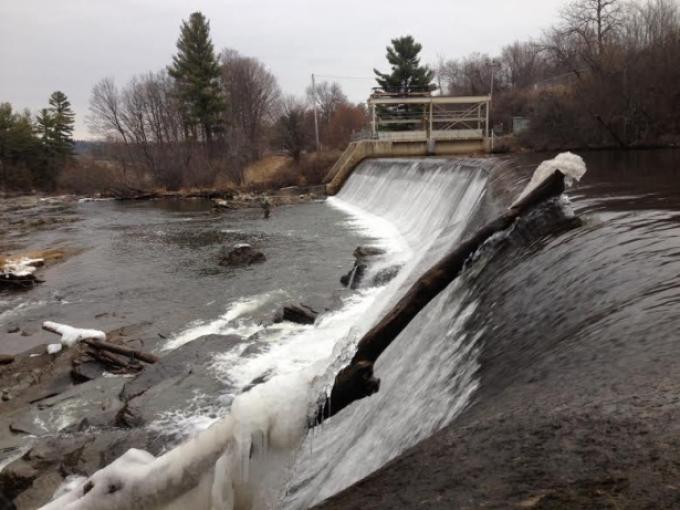
West Rutland falls is a large riverwide waterfall that drops close to 20 ft. The water immediately below has plunge pools, deep runs and some pockets. Below west Rutland Falls is also the first of two USGS waterflow gauges. It can be helpful to note waterlevels related to angling opportunities. Quickly after the falls the river slows again and offers a few miles wide, slow water. This area can have trout, bass, and northern pike. After those few brief miles the Creek plummets over Proctor Falls. Proctor Falls is a striking waterfall, and the site of an old industrial mill. There is a brief section, including the main plunge pool, of ideal trout habitat. Within a hundred yards during normal flows, Otter Creek slows again and for the next approximately 40 river miles between Proctor and Middlebury is primarily a Pike and Bass Fishery.

It is important to note that much of the water, if not close to all of it, is not wading friendly. A personal water craft would be the ideal choice to fish this water. Being that Otter Creek drains so much area, debris often builds up blocking the river. Log jams are the biggest culprits and with annual snow run off, new jams are forming regularly. It is not uncommon for floatable stretches to become blocked with little warning. The banks of Otter Creek throughout this stretch are high, steep and muddy, making a portage all but impossible. Please be careful when considering venturing into these stretches of water. Along the section of Otter Creek between Proctor Falls and Middlebury Falls, three major tributaries including Furnace Brook, the Neshobe River, and Middlebury Rivers all enter Otter Creek. While the substrate does not vary much at these outlets, it does have increased trout populations, as most of this stretch is Pike and Bass. At certain times of the year trout may travel to and from these tributaries to suit needs like, spawning, feeding, escaping predation, and thermal refuge.

Below the Middlebury River, Otter Creek increases in width and can be as large as 40 to 50 feet wide. In the town of Middlebury, and just a one minute walk from the Middlebury Mountaineer, Otter Creek cascades over Middlebury Falls. The next 7 miles of river sees five dams including the one in downtown Middlebury. These are arguably the best miles of trout fishing on Otter Creek. Downtown Middlebury has the second and last USGS gauge. The water beneath the Falls in Middlebury is a small section of good trout water. Access and wading is easier. A pedestrian bridge offers easy access to either side of the river. Like all the dams in the Middlebury – Weybridge area the increased rock, oxygen, and macroinvertibrates offer and ideal habitat for trout. Evening hatches on Otter Creek can be substantial and some of the best in Central Vermont. Otter Creek near all of the Middlebury Area dams can produce Brown and Rainbow Trout averaging from 8-14 inches with much larger fish possible. Just one short mile from Middlebury Falls is Pulp Mill Covered Bridge and Dam. This dam is different then most of the dams on the Otter in that it utilizes the drawn out series of smaller falls as its diversion area. Pulp Mill offers several steps of plunge pools with relatively easy access to all fishable water from the western side of Pulp Mill Bridge. After a mile stretch of flat water, Otter Creek reaches Belden’s Falls. The water below Beldens Falls is a longer stretch of pocket water with riffles. It enters a tight gorge, which is technical whitewater then journeys to its confluence with the New Have River. The width of Otter Creek has again grown at this point, to areas as large as 80 plus feet wide. After a slightly short winding path, the water comes to Huntington Dam, known by some as “Rickety Bridge”. Again the water either top spills or is processed through the dam and has a short area of riffley water for good trout fishing. After a much shorter trip from Huntington Falls, the Otter enters Weybridge and meets the Weybridge dam, also known as Twin Bridges. This area is the last of the Middlebury Area Dams, and actually splits Otter Creek into two dams with a small island park accessed from the road in between. There are a few braids of water below the Twin Bridges and once they meet back together the river slows substantially and becomes a strong Northern Pike fishery. From Twin Bridges it is 3 river miles to the confluence of the Lemon Fair River. The Lemon Fair is a slow, marshy, off color valley stream that can produce some great Northern Pike. 8.5 slow miles downstream of the Lemonfair confluence, Otter Creek flows over the last dam in Vergennes. Below Vergennes dam the Otter is essentially part of Lake Champlain. The last leg of the Otter Creek is slow and wide as it exits into the lake.

The Otter is an unbelievably diverse watershed and a fly angler can find just about any type of fly fishing or species to target in the watershed. The Otter is in our shop’s backyard and we are lucky to get many days guiding on it for many different species. Stop in the Middlebury Mountaineer for ideas on your next Otter Creek angling adventure.

GMA Color Hi-Res Trans_0.png Let us guide you, for this area we offer trips for the following:
Paddling
Fly Fishing

Recent Fishing Reports

Oct 5 2015


Water Temperature: 55-63
Water Clarity: Off, but clearing 24+" visibility
Hatches: Caddis, Baetis & Midge

The Otter is back on the drop and the water levels are coming around quickly. This week looks to be a great week to be on the Otter after the rain refreshed all of the system. Lots of Blue Wings hatching. The Northern Casemaker Caddis is becoming a very good option to consider both dry and nymph.



Aug 2 2015


Water Temperature: 72-76
Water Clarity: OFF
Hatches: N/A

You should not be fishing the Otter for trout. The water is over 70 and shouldn't be fished for trout until it cools substantially. Should only be a few more weeks. I still see people fly fishing the Other almost everyday, and it is frustrating. Let's give those fish a break until the water cools and then enjoy the autumn when the Otter fishes the best all year!


MPCsm.png Past Paddle Events
MPC - Tuesday September 3rd, Otter Creek Vergennes
Sep 3 2013
Vergennes Falls Park
Big Time Awesome Paddle
Apr 12 2016
VT
M-F 10-5:30pm Sat 10-5pm Sun 11-4pm | 802.388.7245 | Map and Directions | Store Info | Staff and Guides